Indian National Congress
1. Establishment and Early Years (1885–1905): The Moderate Phase
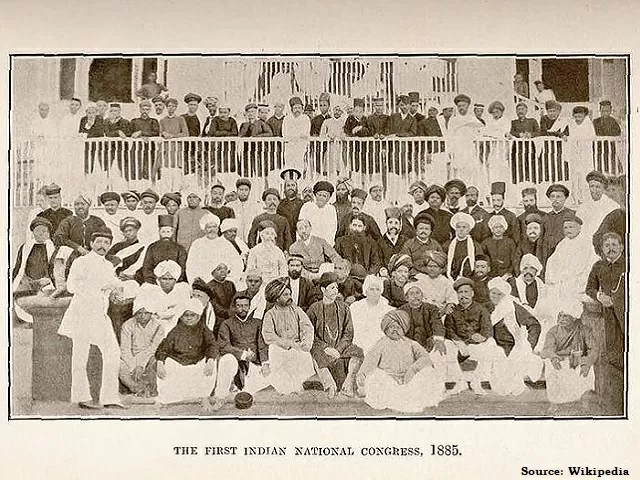
- Establishment: 28 December 1885, at Gokuldas Tejpal Sanskrit College, Bombay.
- Founder: A.O. Hume (Retired British officer), with active involvement of Indian leaders like Dadabhai Naoroji, W.C. Bonnerjee, Dinshaw Wacha, Pherozeshah Mehta.
- First President: W.C. Bonnerjee.
Initial Objectives:
- To develop a feeling of national unity and brotherhood among Indians.
- To provide a platform for the political training of educated Indians.
- To present public opinion before the government through constitutional means (petitions, memorials, delegations).
- To demand administrative reforms (raising the age limit for civil services exam, expansion of legislative councils).
- To oppose economic exploitation (Drain of Wealth theory).
Prominent Leaders: Dadabhai Naoroji, Gopal Krishna Gokhale, Pherozeshah Mehta, Surendranath Banerjee, M.G. Ranade.
Safety Valve Theory: This controversial theory states that Hume established the Congress as a "safety valve" for the British Government to prevent violent rebellion by channeling Indian discontent into a constitutional outlet.
Important Sessions:
- 1906 (Calcutta): Dadabhai Naoroji (President). First use of the word "Swaraj" (self-rule under British dominion). Resolutions on Swadeshi, boycott, national education, and self-government passed.
- 1907 (Surat): Split. Ras Bihari Ghosh (President). Dominance of extremists.
- 1916 (Lucknow): A.C. Mazumdar (President). Lucknow Pact between Congress and Muslim League (agreement on communal electorates).
- 1920 (Calcutta): Lala Lajpat Rai (President). Proposal for Non-Cooperation Movement passed.
- 1920 (Nagpur): C. Vijayaraghavacharya (President). Constitutional changes: Formation of Provincial Congress Committees, Working Committee established, membership fee set at 4 annas (25 paisa). Gandhi’s non-cooperation program endorsed.
- 1929 (Lahore): Jawaharlal Nehru (President). Declaration of “Poorna Swaraj” (complete independence). Decision to celebrate 26 January 1930 as Independence Day. Preparation for Civil Disobedience Movement.
- 1931 (Karachi): Sardar Vallabhbhai Patel (President). Supported Gandhi-Irwin Pact. Resolution passed on Fundamental Rights and National Economic Program (foundation of future constitution).
- 1938 (Haripura): Subhas Chandra Bose (President). Formation of National Planning Committee (Nehru as chairman).
- 1939 (Tripuri): Subhas Chandra Bose (President). Re-elected despite Gandhi’s opposition. Resigned after disputes. Rajendra Prasad became president.
Internal Differences:
- Subhas Chandra Bose vs. Gandhians (1939): Disagreement over immediate struggle against the government.
- Rise of Socialist Ideology: Formation of Congress Socialist Party (CSP) in 1934 by Acharya Narendra Dev and Jayaprakash Narayan.
Important Sessions for Prelims
Year | Location | President | Significance |
1885 | Bombay | W.C. Bonnerjee | 72 delegates attended the first session |
1886 | Calcutta | Dadabhai Naoroji | Joint session of Congress and National Conference |
1887 | Madras | Syed Badruddin Tyabji | Appeal for unity among Muslims |
1888 | Allahabad | George Yule | First English President |
1889 | Bombay | Sir William Wedderburn | – |
1890 | Calcutta | Pherozeshah Mehta | – |
1891 | Nagpur | P. Ananda Charlu | – |
1892 | Allahabad | W.C. Bonnerjee | – |
1893 | Lahore | Dadabhai Naoroji | – |
1894 | Madras | Alfred Webb | – |
1895 | Poona | Surendranath Banerjee | – |
1896 | Calcutta | Rahimtulla M. Sayani | ‘Vande Mataram’ sung for the first time |
1897 | Amravati | C. Sankaran Nair | – |
1898 | Madras | Anand Mohan Bose | – |
1899 | Lucknow | Romesh Chandra Dutt | – |
1900 | Lahore | N.G. Chandavarkar | – |
1901 | Calcutta | Dinshaw E. Wacha | – |
1902 | Ahmedabad | Surendranath Banerjee | – |
1903 | Madras | Lal Mohan Ghosh | – |
1904 | Bombay | Sir Henry Cotton | – |
1905 | Benaras | Gopal Krishna Gokhale | Against Bengal partition |
1906 | Calcutta | Dadabhai Naoroji | Use of the word 'Swaraj' |
1907 | Surat | Ras Bihari Ghosh | Split between Moderates and Extremists |
1908 | Madras | Ras Bihari Ghosh | Continuation of previous session |
1909 | Lahore | Madan Mohan Malaviya | Indian Councils Act 1909 |
1910 | Allahabad | Sir William Wedderburn | – |
1911 | Calcutta | Bishan Narayan Dhar | ‘Jana Gana Mana’ sung for the first time |
1912 | Bankipur | Raghunath Narasinha Mudholkar | – |
1913 | Karachi | Syed Mohammad | – |
1914 | Madras | Bhupendra Nath Basu | – |
1915 | Bombay | Satyendra Prasanna Sinha | – |
1916 | Lucknow | Ambika Charan Mazumdar | Lucknow Pact |
1917 | Calcutta | Annie Besant | First woman President |
1918 | Bombay & Delhi | Syed Hasan Imam, Madan Mohan Malaviya | Two sessions held |
1919 | Amritsar | Motilal Nehru | Condemnation of Jallianwala Bagh massacre |
1920 | Nagpur | C. Vijayaraghavacharya | – |
1921 | Ahmedabad | Hakim Ajmal Khan | – |
1922 | Gaya | C.R. Das | – |
1923 | Kakinada | Maulana Mohammad Ali | – |
1924 | Belgaum | Mahatma Gandhi | Chaired by Gandhi |
1925 | Kanpur | Sarojini Naidu | First Indian woman President |
1926 | Guwahati | S. Srinivasa Iyengar | – |
1927 | Madras | M.A. Ansari | – |
1928 | Calcutta | Motilal Nehru | Formation of All India Youth Congress |
1929 | Lahore | Jawaharlal Nehru | Resolution of ‘Poorna Swaraj’ |
1930 | – | – | No session |
1931 | Karachi | Vallabhbhai Patel | Fundamental Rights & Gandhi-Irwin Pact |
1932 | Delhi | Amrit Ranchhoddas Seth | – |
1933 | Calcutta | Nellie Sengupta | Presided by Nellie Sengupta |
1934 | Bombay | Rajendra Prasad | – |
1936 | Faizpur | Jawaharlal Nehru | First rural session |
1937 | Lucknow | Jawaharlal Nehru | – |
1938 | Haripura | Subhas Chandra Bose | National Planning Committee formed |
1939 | Tripuri | Subhas Chandra Bose | Bose resigned, Rajendra Prasad appointed |
1940 | Ramgarh | Abul Kalam Azad | – |
1941–45 | – | – | No sessions due to leaders' imprisonment |
1946 | Meerut | Acharya Kripalani | Last session before independence |
1948 | Jaipur | Pattabhi Sitaramayya | First session after independence |
Prelims Special Sessions
Event/Session | Year | Location | President | Key Points |
Establishment | 1885 | Bombay | W.C. Bonnerjee | Role of A.O. Hume, Safety Valve Theory |
Merger | 1886 | Calcutta | Dadabhai Naoroji | Merger of Indian National Association into Congress |
Poona Session | 1895 | Poona | Surendranath Banerjee | First singing of national song ‘Vande Mataram’ |
Swaraj Proposal | 1906 | Calcutta | Dadabhai Naoroji | First use of the word ‘Swaraj’ |
Surat Split | 1907 | Surat | Ras Bihari Ghosh | Split between Moderates and Extremists |
Lucknow Pact | 1916 | Lucknow | A.C. Mazumdar | Congress-Muslim League unity, communal electorates |
Nagpur Session | 1920 | Nagpur | C. Vijayaraghavacharya | New constitution, endorsement of Non-Cooperation Movement |
Poorna Swaraj | 1929 | Lahore | Jawaharlal Nehru | Declaration of complete independence, 26 Jan as Independence Day |
Karachi Session | 1931 | Karachi | Vallabhbhai Patel | Gandhi-Irwin Pact supported, Resolution on Fundamental Rights |
Haripura Session | 1938 | Haripura | Subhas Chandra Bose | Formation of National Planning Committee |
Tripuri Crisis | 1939 | Tripuri | Subhas Chandra Bose | Re-elected despite Gandhi’s opposition, later resigned |
Important to Remember:
- First Woman President: Dr. Annie Besant (Calcutta Session, 1917)
- First Indian Woman President: Sarojini Naidu (Kanpur, 1925