

“75 Years of India-China Relations”
"The Himalayas may form a natural boundary, but history, trade, and ideas have long flowed across them."
The India–China relationship, spanning over two millennia, is a complex interplay of civilizational exchange, strategic competition, and economic engagement. As the two Asian giants mark 75 years of formal diplomatic relations in 2025, the moment offers an opportunity to reflect on their evolving trajectory—from the cultural camaraderie of the 'Hindi-Chini Bhai Bhai' phase to the contemporary dynamics shaped by border tensions, trade asymmetries, and global power recalibrations.
Table: Snapshot of India-China Relations
Dimension | Details |
Diplomatic Ties | Established on 1 April 1950 |
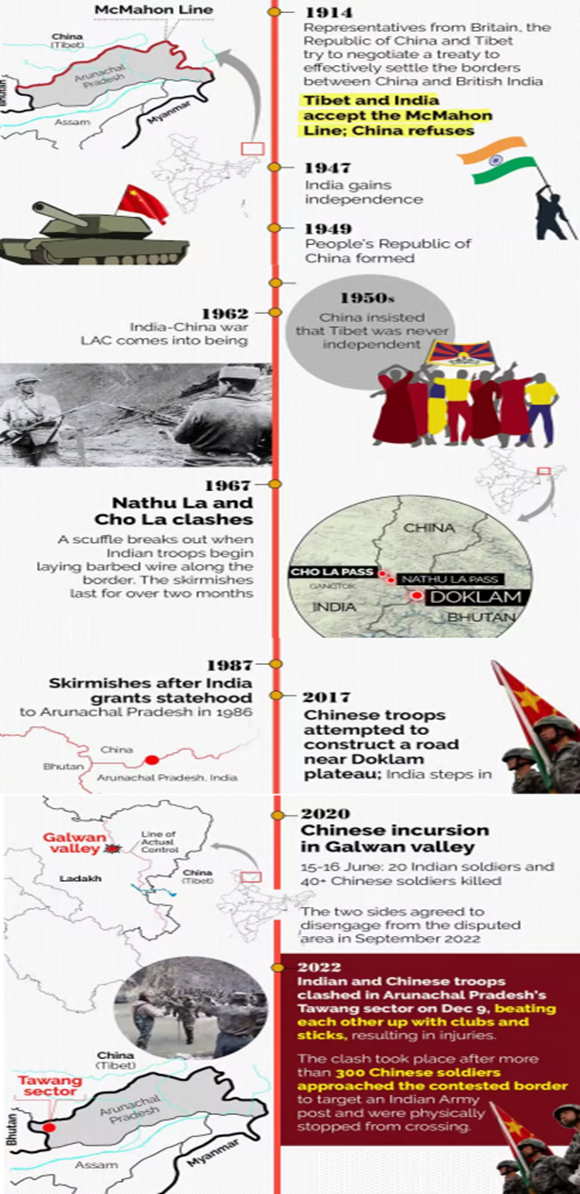
War/Conflict | 1962 War; Stand-offs: Doklam (2017), Galwan (2020) |
Key Agreements | 1993 Peace & Tranquility; 1996 Military CBMs |
Multilateral Forums | BRICS, SCO, G-20, ISA |
Border Issue | Undefined 3,488 km LAC (frequent tensions) |
Strategic Concerns | BRI, CPEC in PoK |
Historical Trajectory of India–China Relations
- Early Diplomatic Ties (1950):
India was among the first nations to recognize the PRC; formal diplomatic ties established on 1 April 1950, emphasizing a non-aligned and independent foreign policy. - 'Hindi-Chini Bhai Bhai' Era:
1950s marked by mutual goodwill and Asian solidarity, underlining Nehru-Zhou Enlai diplomacy. - Panchsheel Agreement (1954):
Institutionalized Five Principles of Peaceful Coexistence—non-interference, territorial integrity, and mutual respect—forming the normative foundation of Asian diplomacy. - Sino-Indian War (1962):
- Triggered by border disputes; led to a strategic rupture.
- Aksai Chin remains under Chinese control; LAC remains undefined.
- Normalization Phase (1988–1993):
- Initiated by PM Rajiv Gandhi’s visit (1988).
- Agreements on Peace and Tranquility (1993) and Military CBMs (1996)—early CBMs architecture in Asia.
- Economic Engagement Boom (2000s):
- Trade expanded significantly; China became India’s largest trading partner.
- Integration focused on manufacturing imports vs. IT & pharma exports aspiration.
- Recent Standoffs:
- Doklam (2017) and Galwan Valley (2020) indicate recurring LAC volatility.
- Highlights need for new-era CBMs and joint patrolling protocols.
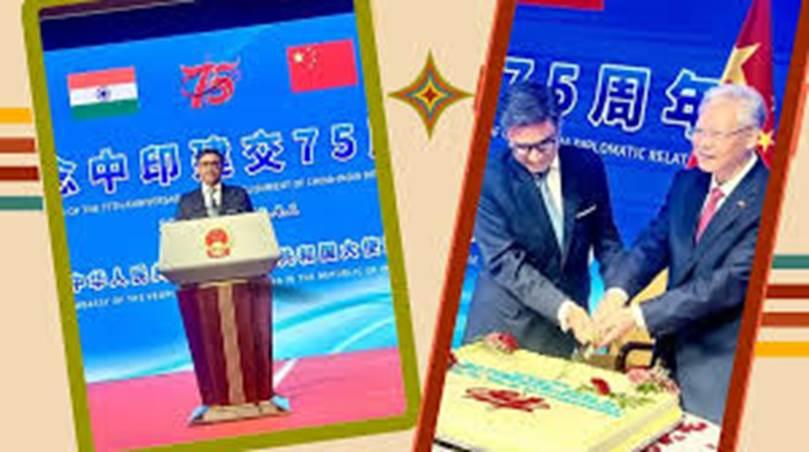
75th Anniversary Diplomacy (2023–2025)
- Foreign Secretary’s Visit (2025):
- Focused on border peace, economic cooperation, and cultural diplomacy.
- Reiterated need for handling differences constructively.
- Restoration of Kailash Mansarovar Yatra:
- Resumption of the yatra after COVID and border tensions indicates soft power and religious diplomacy revival.
- Direct Air Connectivity Resumed:
- After five years, expected to boost tourism, student exchange, and track-II diplomacy.
- Educational and Cultural Programs:
- Promotes people-to-people diplomacy and long-term civilizational engagement.
Key Strategic and Bilateral Concerns
- Unresolved Border Disputes:
- LAC remains undefined; conflicting perceptions lead to recurrent tensions.
- Galwan Valley (2020) and Tawang (2022) episodes intensified mistrust and militarization of the frontier.
- China-Pakistan Nexus via BRI/CPEC:
- CPEC runs through PoK, undermining India’s sovereignty.
- BRI's opaque financing and strategic control raise alarms about China’s intent in the region.
- Growing Trade Imbalance:
- Trade deficit increased to around USD 100 billion (2023–24), widening India’s economic dependence (Source: Ministry of Commerce, India).
- India seeks balanced and diversified trade, reducing critical import dependency.
- China’s Strategic Expansionism:
- Assertive presence in South Asia and Indian Ocean through String of Pearls strategy.
- Growing footprint in Maldives, Sri Lanka, and maritime infrastructure control fuels India’s Indo-Pacific security concerns.
Future Prospects and Way Forward
- Enhancing Economic Synergies:
- Collaboration in renewable energy, AI, digital trade, green infrastructure holds promise.
- Bilateral trade agreements can address trade asymmetries and diversify Indian exports.
- Strengthening CBMs & Military Dialogue:
- Upgrade existing CBMs to modern LAC conditions; deploy hotlines and joint mechanisms.
- Educational and Cultural Diplomacy:
- University-to-university MoUs, language programs, and joint heritage projects can deepen ties.
- Strategic Balancing with Engagement:
- India can balance strategic autonomy in QUAD while maintaining non-zero-sum ties with China.
- Pursue issue-based coalitions in multilateral forums (e.g., BRICS on climate, SCO on terrorism).
Unique Academic Insight
- “Competitive Cooperation” Framework:
The India-China relationship exemplifies geopolitical dualism—economic interdependence amidst strategic divergence, requiring layered diplomacy balancing deterrence with engagement.
Conclusion
India–China relations at 75 are marked by strategic complexity—a mix of civilizational engagement, economic ambition, and security mistrust. Future trajectories depend on managing boundaries, balancing trade, and leveraging cultural diplomacy to mitigate conflict potential.


